
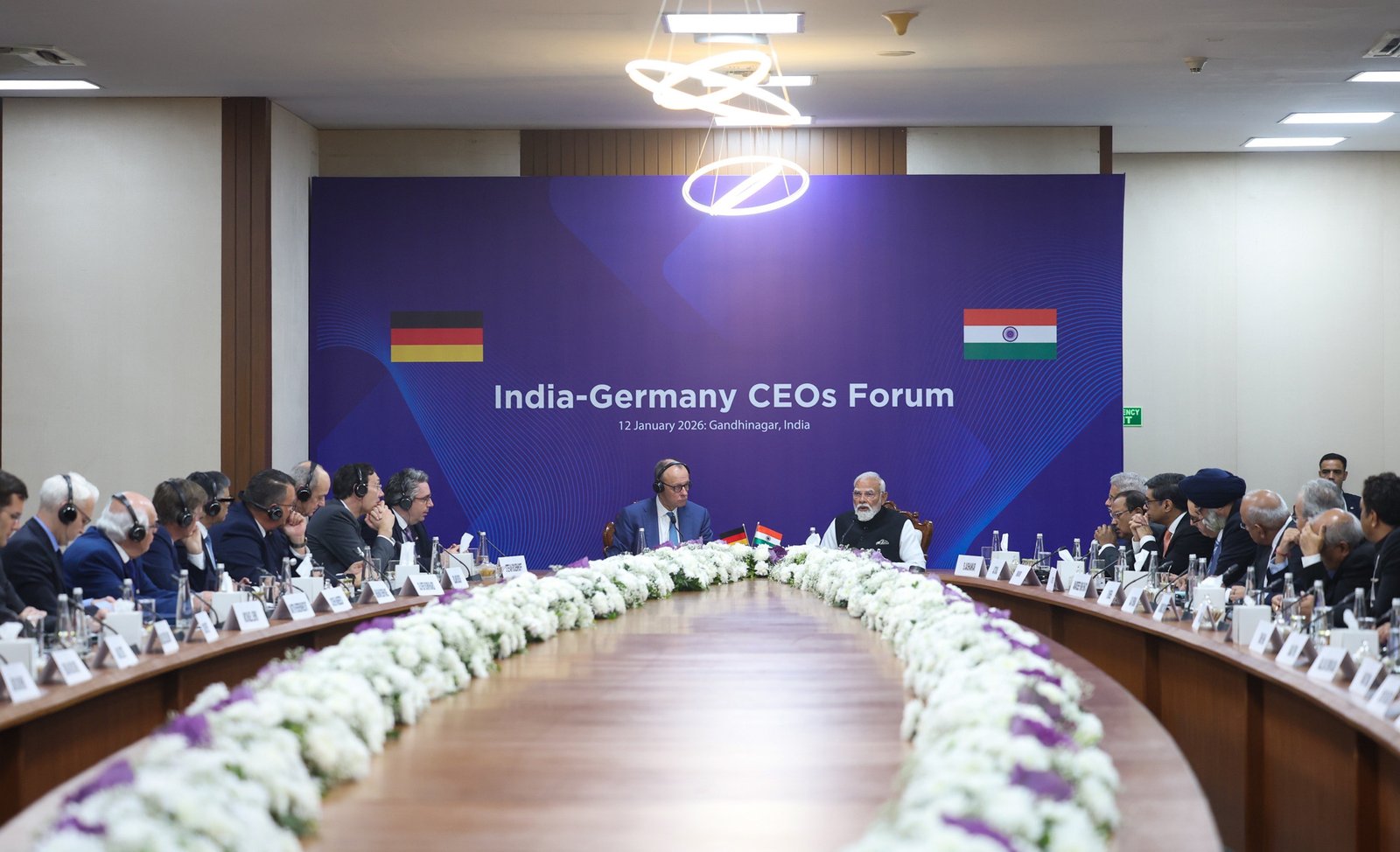
The central government on Monday released the key outcomes of the visit of the Chancellor of the Federal Republic of Germany to India held on January 12–13, according to a press release issued by the Press Information Bureau.
The list of outcomes covers agreements, joint declarations and announcements across defence, economy, critical technologies, renewable energy and education sectors aimed at strengthening bilateral cooperation between the two countries.
Among the agreements signed during the visit was a Joint Declaration of Intent on Strengthening Bilateral Defence Industrial Cooperation, and a Joint India-Germany Semiconductor Ecosystem Partnership aimed at expanding cooperation in critical and emerging technologies.
Other cooperation documents include a roadmap on higher education, intent for collaboration in critical minerals and telecommunications sectors, and several memorandums of understanding covering traditional medicine and renewable energy.
On the announcements front, the government said visa-free transit for Indian passport holders through Germany will be introduced, and new bilateral dialogue mechanisms in foreign policy, security and Indo-Pacific issues will be established. Funding commitments of EUR 1.24 billion under the Green and Sustainable Development Partnership were also outlined, supporting renewable energy, green hydrogen and climate-resilient infrastructure projects.
The release additionally highlighted the launch of a battery storage working group under the India-Germany Renewable Energy Investment Platform, and expanded development cooperation projects in African partner countries, including digital technology and climate innovation hubs.
The list also included cultural and people-to-people cooperation, such as maritime heritage development, postal services collaboration, and youth sports development agreements.
The press release did not specify a timeline for the implementation of the agreements or detail funding sources for the announced projects.